
Compare Wisconsin Property Value Figures
One Wisconsin property value search can return several figures at once. Assessed, equalized, estimated fair market, and sale amounts may sit side by side. They are not interchangeable. Each comes from a different record. The local assessor supplies the parcel assessment. DOR publishes municipality-level equalized values and aggregate ratios. A local bill may carry an estimated fair market figure, while a deed or Real Estate Transfer Return (RETR) records the actual transaction.
| Value record | What the number means | Where to check |
|---|---|---|
| Assessed value | Local parcel value used in assessment and tax administration | Municipal assessor or property record card |
| Equalized value | DOR's municipality or taxation-district estimate brought to a uniform full-value level for most general property | DOR equalized-value report |
| Estimated fair market value | A local estimate displayed on some assessor records or tax bills | Local assessment record or bill |
| Reported sale price | Consideration reported for a transfer, subject to transaction and data limits | Recorded deed and DOR RETR search |
| Land and improvement values | The assessor's separate parcel components and total | Assessor card; some statewide parcel fields |
Every Wisconsin value figure carries its own timeline. Check the tax year, municipality, and source date printed beside each number before comparing anything. One office can be showing a fresh cycle. A neighboring office may still list the prior one. The table points you to the right place to verify each figure. It cannot turn an assessment into an appraisal, however.
Find Wisconsin Assessed Value Locally
Begin at the municipal level. From there, the DOR assessor lookup connects you to the local office or its portal. Wisconsin offers no uniform statewide assessment search by owner name. The route runs through each municipality. When results return several records, match on the parcel or tax key and hold onto the full situs address. A street address can change or span more than one parcel.
- Identify the property municipality and county from an official local record or parcel map.
- Open that municipality's assessor site and search by address or its parcel identifier.
- Save the assessed value, tax-roll year, class, land and improvement amounts, and any local estimated fair market value with the source date.
- If the record is not online, ask the assessor to inspect or provide the existing property card for the parcel and year.
Madison shows how much local practice can vary. Its public assessor lookup takes a street address, an address range, an owner last name, or a parcel number. Other Wisconsin municipalities may give you fewer entry points. Treat Madison as one documented example, not a statewide template. Whatever the tool, pull the assessment record from the office that actually holds that parcel; a statewide search can route the request, but the local assessor remains the parcel-level source.
- Assessed value
- The parcel-level value recorded by the local assessor for assessment and tax administration.
- Estimated fair market value
- A local estimate that may appear on an assessor record or tax bill; it is not a sale appraisal.
- Equalized value
- A DOR municipality or taxation-district estimate adjusted to a uniform full-value level for most general property.
- Aggregate ratio
- A comparison of local assessed value with DOR equalized value at the municipality level.
- Sale consideration
- The transaction amount reported with a transfer, which may not be an arm's-length market indicator.
Wisconsin Assessed and Equalized Values
Assessed value belongs to a single parcel. Equalized value works differently. DOR uses it to compare values across municipalities and taxation districts. It brings most general property to a uniform 100% full-value level. The aggregate ratio then summarizes how local assessments relate to that DOR equalized value. Keep it at the municipality level. It is not a percentage you can apply mechanically to every home or parcel.
DOR publishes the summary aggregate-ratio report. It lets anyone see the assessment level behind its comparisons. The report lists Wisconsin municipalities. It also helps explain why two local property records figures can differ. Neither figure is a duplicate of the other.
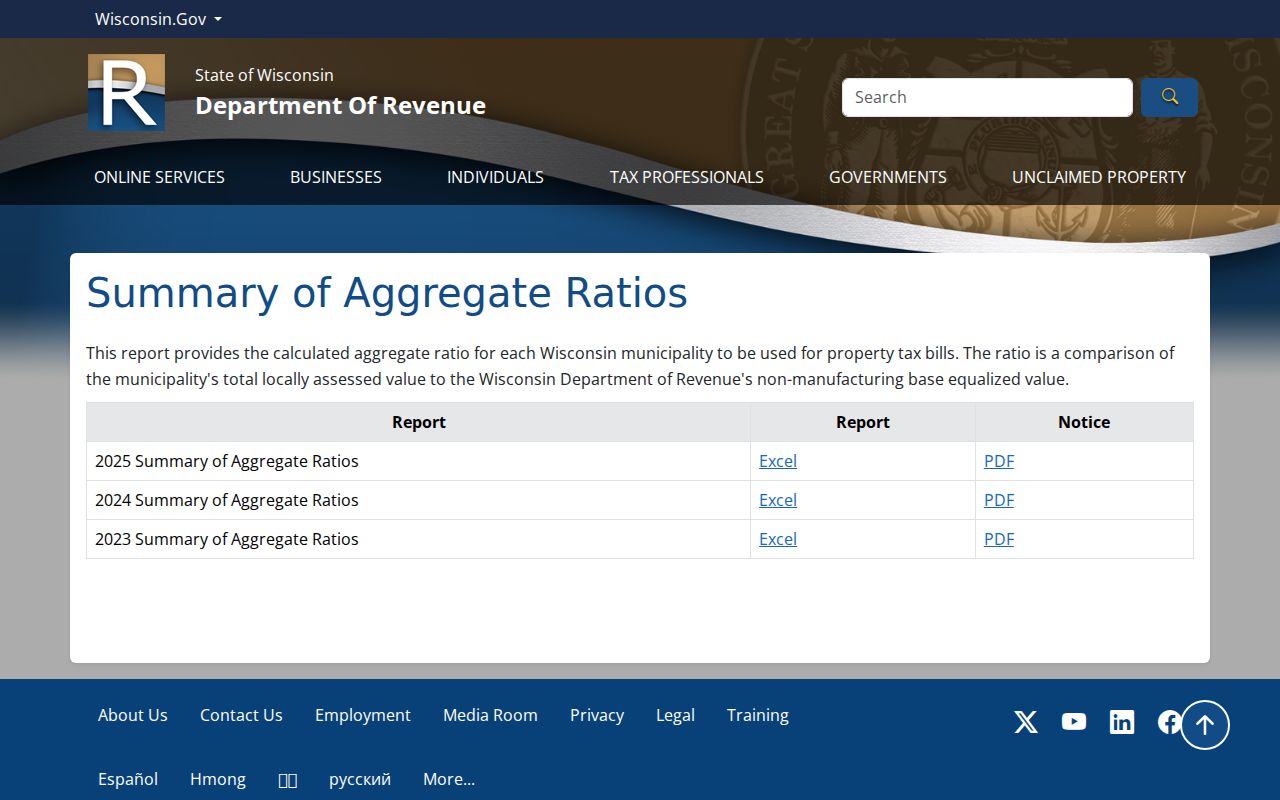
Check the municipality and report year printed beside each ratio before drawing any conclusion. The DOR report gives comparison context only. For an actual Wisconsin parcel, go back to the assessor's card, because the assessed value there is the figure that matters, not a statewide average or a parcel appraisal or a bill balance.
Land and Improvements in Wisconsin Assessments
A property card often splits a Wisconsin assessed value into three lines. Land comes first, then improvements, then the total. The statewide V12 parcel service goes further. It carries fields for the tax-roll year, total assessed value, assessed land, assessed improvements, estimated fair market value, gross and net property tax, class, acres, and source. It also carries a load date. That schema shows which value components a shared layer can hold.
The layer is still a blend of local submissions. The V12 service reports a June 30, 2026 data and edit date, while any local source date may differ. A blank field usually means the municipality never supplied it. A statewide record can also lag a newer municipal card. The State Cartographer's Office V12 REST layer publishes the full field schema. It is the clearest view of how the Wisconsin parcel layer labels value components. It also shows how it labels source dates.
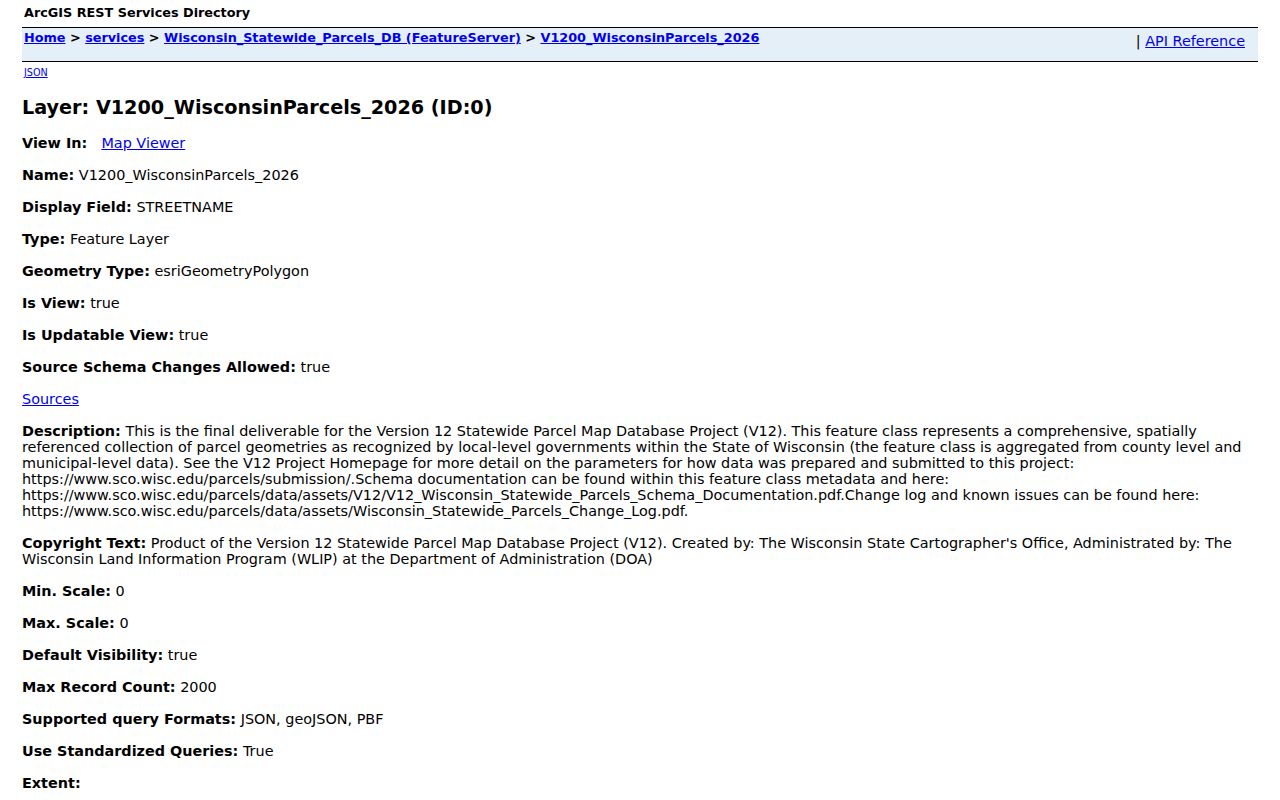
Whenever you copy a Wisconsin value from the statewide layer, keep its context attached. Record the tax-roll year, parcel date, load date, county, and parcel source alongside the number. The State Cartographer's Office parcel page offers downloads and schema details, and the county or municipal assessor holds the newer parcel-level record.
Wisconsin Sales Versus Assessed Value
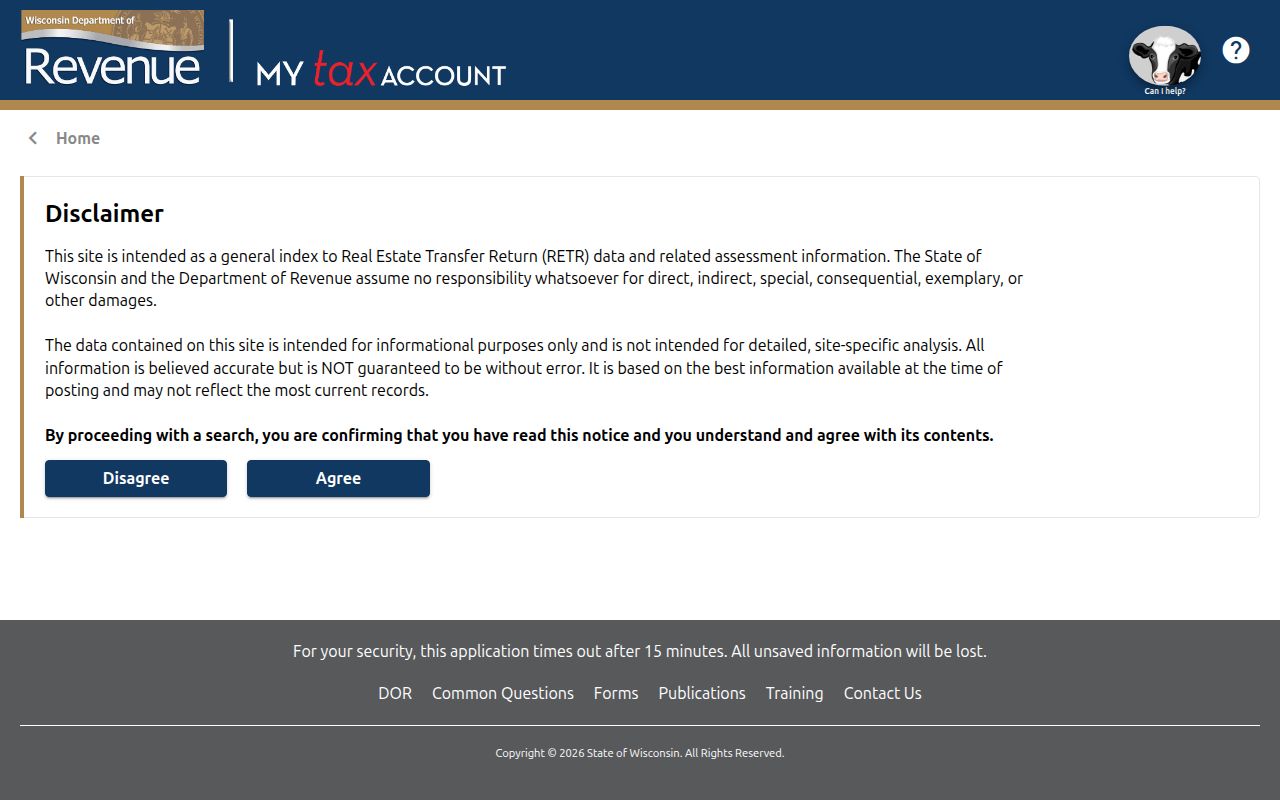
A recorded sale price can explain a parcel's history. It is not automatically the assessed value, and it is not a market appraisal. DOR's Real Estate Transfer Return system moved into My Tax Account in January 2026. The public route now runs through My Tax Account, then Real Estate Transfer, then "Search Wisconsin Property Data." The February 2026 notice says the public results omit grantor and grantee email and phone fields. That shifts where a search starts, not what a sale amount proves.
The older Wisconsin Property Sales Information search was the previous public entry point. It covered deed records and sale data. DOR's current 2026 route notice explains the move into My Tax Account. It also lays out the new public-search path. If the old address redirects, follow the notice.
The DOR's assessor-side Provide Assessment Data search serves a different purpose. It is not a complete public sales list. Some transfers drop out automatically. These include gifts, exempt-fee sales, and partial-interest sales, so those may never reach its ratio data. For Wisconsin valuation questions, match each sale to the recorded deed and its parcel number before drawing conclusions. Keep the assessment's own year and data source separate from the sale record itself. The two come from different points in the property records pipeline.
Wisconsin Property Classes and Value
Classification drives Wisconsin property values more than many owners expect. Agricultural land gets use-value treatment. Undeveloped and agricultural forest classes follow their own value standards. The class printed on the local assessment record is part of the math. It is not a decorative label. Before weighing one parcel against another class or a statewide average, confirm the year first. Confirm the local classification too.
Two state references frame the system. DOR's 2026 Wisconsin Property Assessment Manual lays out the value standards. The Guide for Property Owners translates assessment concepts into plain terms. The municipal assessor still applies the classification to each parcel card. That office also keeps the local record current.
Revaluation Shifts Wisconsin Assessed Value
A Wisconsin assessed value can move for several reasons. Revaluation, new construction, demolition, annexation, a class change, or a market trend will all shift it. The year-to-year history proves that something changed. It cannot, by itself, prove a sale price, an ownership transfer, or a boundary. Treat two figures as a continuous series only after matching the assessor's year, the notice date, and the parcel key.
The 2026 DOR materials refresh both the Property Assessment Manual and owner guidance, covering value standards and how assessment levels are explained. For a single year, the local assessor can point to the roll or notice behind the figure. Questions about payments, credits, or appeal schedules lead elsewhere. The separate Wisconsin property tax records page covers those local tax records.
Limits of Wisconsin Property Value
An assessor's value serves tax administration, nothing more. It is not a title opinion, a survey, or a sale appraisal. A property value record also cannot confirm that every transfer was an open-market sale. Some transactions are not arm's-length deals. Gifts, partial-interest transfers, sheriff sales, and trust activity are among them. Ratio analysis may reject these transfers. A blank parcel value in a statewide layer can puzzle a researcher. It simply means an attribute was missing or incomplete. It does not mean the parcel lacks an owner or a value.
Value is not price. Wisconsin assessed value helps administer local property taxes. It does not promise what a parcel would sell for, and a recent sale does not automatically set the next assessment.
For due diligence, keep the municipal assessment, the tax year, the source date, and any separately recorded sale information in one file. When two figures conflict, name both dates and ask the custodian who controls the specific record.