
Read a Wisconsin Property Tax Record
A Wisconsin property tax record gathers its fields from several local offices. Start with the tax year. The parcel or tax key ties the pieces together. Note which office supplied each entry, since municipalities handle the assessment and billing while county systems add parcel and delinquency data. A bill records the charge and its payment status. It is not title proof or an appraisal. For the numbers alone, the Wisconsin property value page explains how assessed, equalized, and sale figures differ.
| Record field | What it helps answer | Likely keeper |
|---|---|---|
| Parcel or tax key and tax year | Which property and annual record the result describes | Municipal assessor, Real Property Lister, or treasurer |
| Land, improvement, and total assessment | How the assessor divided the parcel value | Municipal assessor |
| Class, credits, exemptions, special charges | Which local tax-roll entries affect the bill | Assessor, clerk, or treasurer |
| Tax district, gross and net tax | Which levy and credits appear in the annual charge | Municipal clerk or treasurer |
| Installment, payment, or delinquent balance | Whether a listed amount remains due and when payment posted | Municipal treasurer; county treasurer for some delinquent matters |
Some Wisconsin records add an estimated fair market value, an equalized value, sales used or reported, and Open Book or Board of Review dates. Not every local screen shows them. Fields vary by municipality. Keep the displayed tax year with any printed copy. That habit keeps an older statewide copy from passing as the current municipal account.
Which Office Holds Each Wisconsin Tax Record?
No single portal gathers every piece of a Wisconsin tax record. The municipal assessor discovers, lists, and values taxable property. County Real Property Listers are the keepers of the parcel number, ownership, mailing address, and legal description. These details are tied to recorded documents. Municipal clerks and treasurers build the annual assessment and tax rolls. They also handle bills, payments, credits, and special assessments. A county treasurer may also hold delinquent collections, postponed amounts, and tax-deed or foreclosure records.
The Department of Revenue (DOR) acts as the statewide routing layer. Its assessor hub links to local assessors, manuals, revaluation details, and review resources. The DOR property-tax hub gathers owner guidance, credits, forms, appeals, and local contacts. It never replaces the municipal bill itself. That distinction matters. A Wisconsin address can carry a city mailing name. Yet it may sit in a different tax municipality entirely.
On the DOR's Wisconsin property-tax page, statewide forms sit grouped beside local-office links. Follow those routes to the right custodian. None of them offers a statewide account lookup.
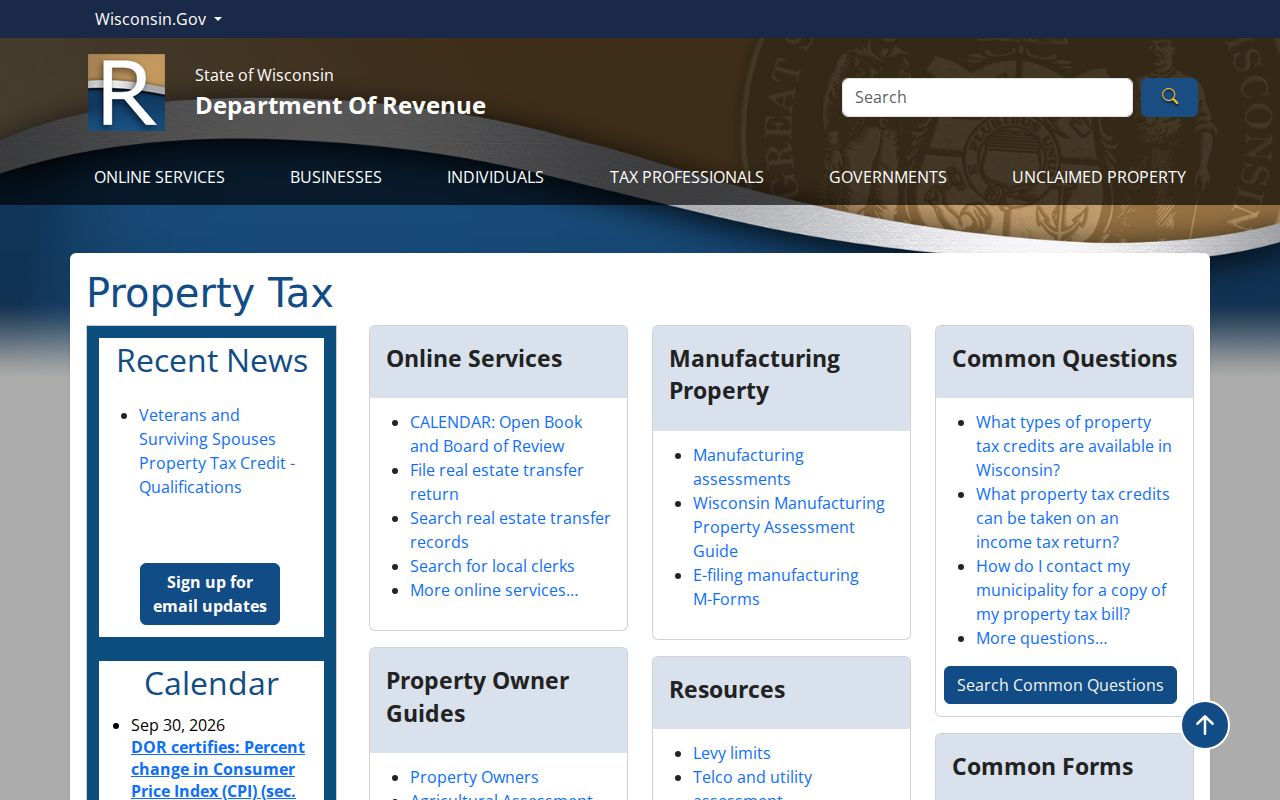
The statewide page cannot confirm a parcel's current local balance. Follow the assessor, clerk, or treasurer link for the municipality named on the property record itself.
Trace a Wisconsin Tax Bill by Parcel
An address is a workable start. A parcel or tax key is the steadier link. Assessors and treasurers both key on it. A bill may sit with one municipality even when a county map first finds the parcel. The Wisconsin property search route helps identify the parcel and its municipality before you open the local tax account.
- Confirm the municipality and county for the situs address. A ZIP code or mailing city alone does not establish the tax jurisdiction.
- Use the official municipal assessor or tax lookup to locate the parcel. Keep leading zeroes in a parcel number and save any older tax key shown.
- Open the bill for the correct tax year and record the parcel, assessed value, tax district, charges, credits, installment state, and payment date.
- If a balance or payment status matters, confirm it with the current treasurer account or office. Ask whether a recent payment has posted before treating an online amount as final.
Madison's assessor is one documented local example. Its lookup is not a statewide form, and it accepts several search keys:
| Madison search mode | Fields captured in the form | Use |
|---|---|---|
| Address | Required house number and street name; optional direction, street type, and unit | Find a situs record when the address is known |
| Address range | Beginning and ending house numbers plus street name; direction, type, and unit are optional | Review a run of parcels on one street |
| Owner last name | Required last name; the form tip allows partial or full names | Locate a parcel when the owner spelling is known |
| Parcel number | Required parcel number | Return to a known Madison parcel record |
Those fields come from the City of Madison assessor lookup. Other Wisconsin municipalities differ. A blank result is not the final word. Contact the local assessor or treasurer with the address, municipality, parcel or tax key, and tax year instead.
- Assessment roll
- The local record of assessed property and value for an assessment year.
- Tax roll
- The official record of taxes levied and the charges delivered for collection.
- Tax district
- The local taxing jurisdictions associated with a parcel, which can include separate school or special-purpose districts.
- Delinquent balance
- An amount the responsible treasurer lists as unpaid; check current payment, interest, and status with that office.
Wisconsin Tax Rolls and Assessment Rolls
The assessment roll and the tax roll are related but separate documents. They are not interchangeable. An assessor values and classifies taxable parcels. Once the local process sets the assessment, the municipal clerk's tax roll records the tax levied. DOR's Wisconsin Property Assessment Manual says the clerk delivers a new tax roll to the treasurer each December. A bill therefore reflects its own tax year. A fresh assessor result may show a later value or updated parcel detail.
For assessment questions, ask the municipal assessor for the property record card or assessment roll. The card is open to inspection. A paper copy must be producible on request, though posting it on a municipal website is not required. For amounts paid, installments, credits, or current delinquency, ask the treasurer. A county Real Property Lister or GIS office can resolve a parcel-key mismatch. Its map does not set the current balance.
This split also explains inconsistent-looking results. Each office updates on its own cycle. The assessor, clerk, treasurer, and statewide map rarely match. Compare the record year, municipality, and source date first. Only then decide one record is wrong. The 2026 Wisconsin Property Assessment Manual describes the state framework, while the local office controls its own parcel record and collection account.
Open Book Starts Wisconsin Tax Appeals
Wisconsin's local appeal season runs in a set order. Open Book comes first. It is the taxpayer's chance to sit down with the municipal assessor. It lets a property owner question the work behind a parcel's assessment. The Board of Review follows, acting as the formal local appeal body. DOR posts a municipality-by-municipality calendar. It pairs each assessor and clerk with meeting dates and contact details. State material places Open Book roughly between late May and mid-June. Each municipality still picks its own dates and procedures.
Madison's 2026 notice offers a useful example of that variation. It listed Open Book for May 4 through 8. It set a May 15 appeal deadline. Those dates are local, not a statewide property records schedule. Rely on the current notice for the parcel's own municipality. The DOR Open Book and Board of Review calendar is the place to start. The local assessor or clerk can confirm what the latest notice says.
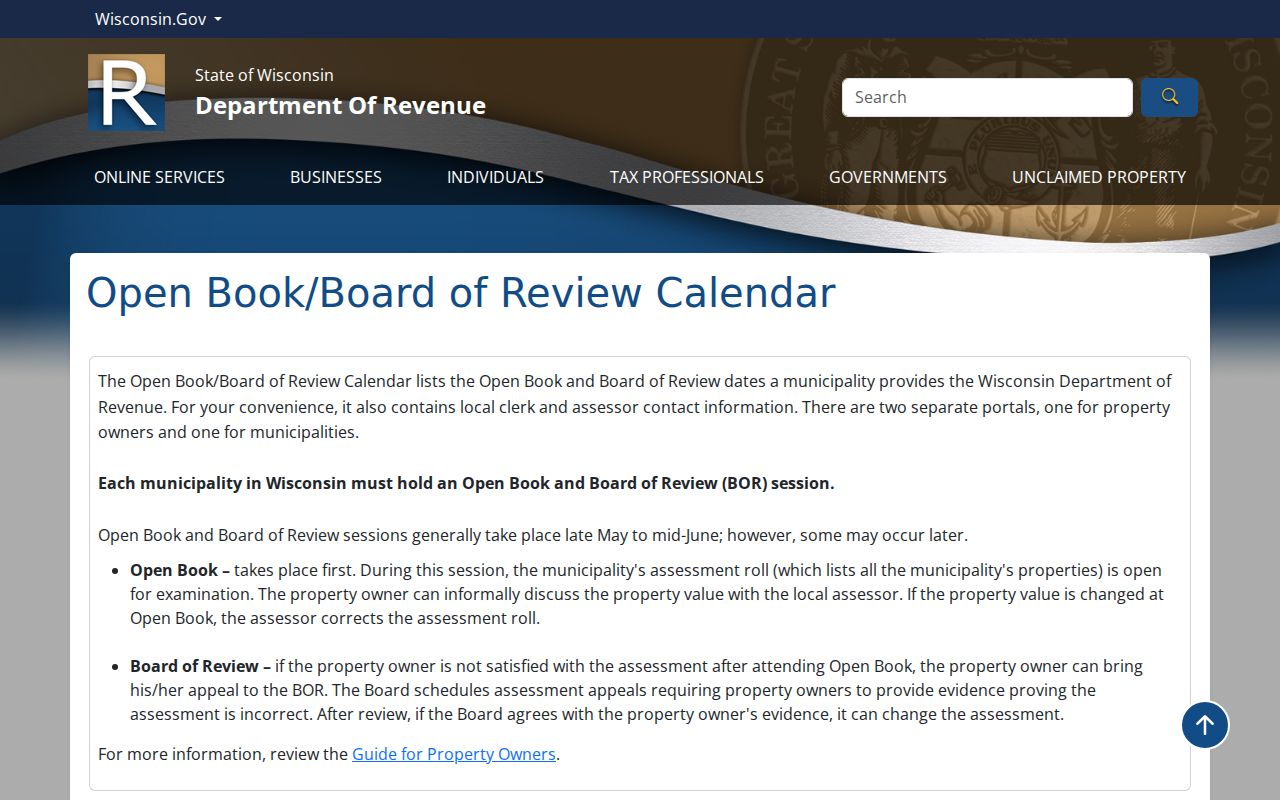
Bring the parcel record, the assessment year, and evidence about the parcel's condition or value. Match the evidence to the local process. DOR's 2026 Guide for Property Owners walks through assessment and appeal steps, while the municipality's notice governs its own filing deadlines and details.
Check the local date first. Wisconsin has no single statewide filing deadline for every assessment appeal. DOR's calendar shows the local schedule, and the assessor or clerk can confirm the notice, evidence rules, and filing method for the parcel.
Wisconsin Credits and Special Tax Charges
A Wisconsin tax bill rarely holds just one number. The local record can carry credits, exemptions, the tax district, gross and net property tax, special assessments, and other charges. Each line answers a different question. The assessor keeps classification and assessment details for the parcel. The clerk or treasurer holds the roll and the collection record. Do not treat every credit or charge as a statewide rule. Check each line with the office that issued it.
DOR's property-tax hub collects owner guidance and exemption materials. These include PR-230 for a property tax exemption request and PR-303 for a renewable-energy exemption request. Other DOR reports include PC-220, PC-220A, and PC-226. These forms are not interchangeable. The form or local program determines the fields and rules that apply. So ask the municipal assessor or clerk which filing concerns the parcel and the current year.
Keep the class, district, credits, and special-charge lines with the bill for any Wisconsin tax comparison. One line can shift the net amount. It can do so without touching the parcel's underlying deed records or plat map. A statewide resource can explain the form families. Only the local custodian can resolve a specific entry on a specific bill.
Check a Wisconsin Delinquent Tax Balance
Delinquent property tax records leave a different trail than the current assessment. The municipal treasurer keeps local payment information. The county treasurer may take over delinquent or postponed collection. It can also handle later tax-deed or foreclosure steps. Wisconsin has no single statewide tax-sale list or common search form. County notices, sheriff pages, local tax portals, recorded documents, and circuit-court cases can all matter. None of them alone proves a balance is still due. None of them alone proves a sale will occur.
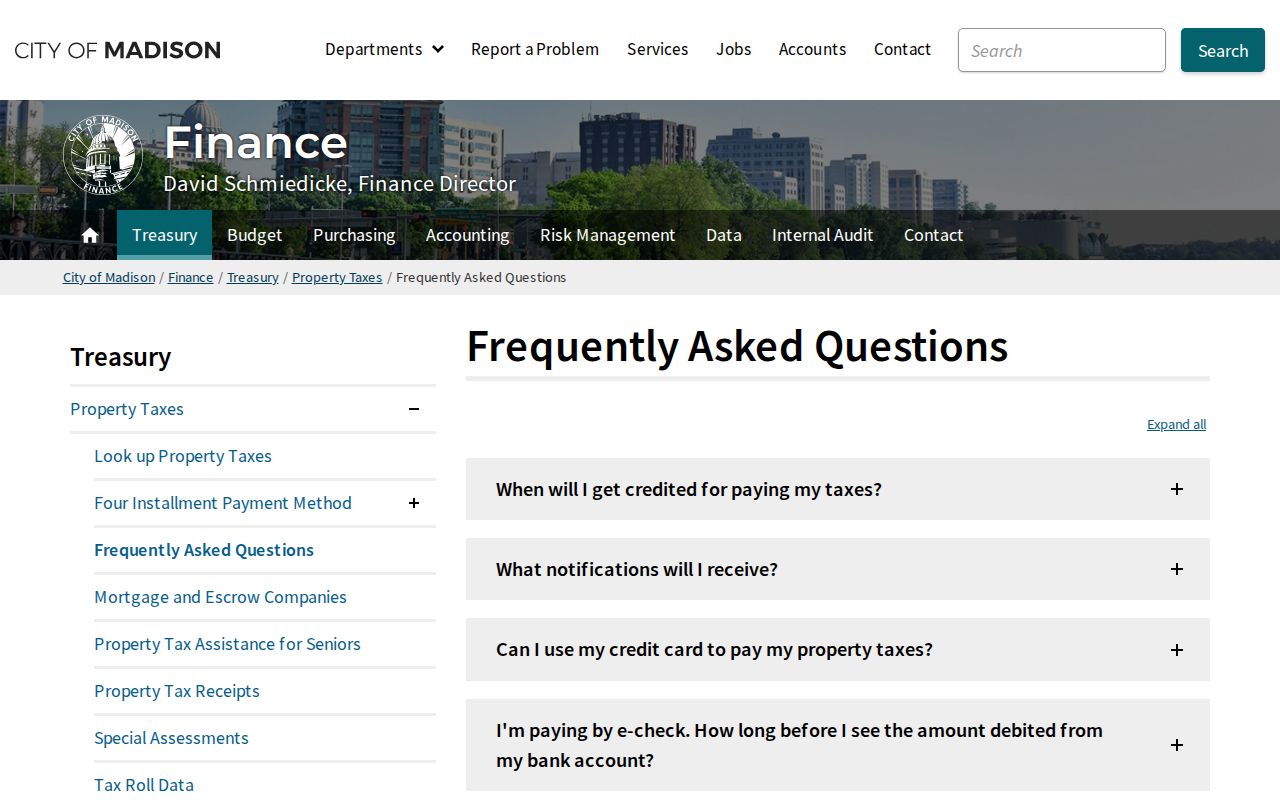
Madison's tax-details and payment FAQ is one representative local page. It serves the parcel-number and payment workflow. It covers bill details, address changes, and payment timing. It does not establish how every municipality posts a payment.
Milwaukee County's delinquent-tax inquiry shows how one county handles the question. It can list parcels with a zero balance. It also warns that a recent payment may take one business day to appear. That timing, along with any card or electronic-check fee, applies to Milwaukee alone. Before trusting any Wisconsin delinquency result, confirm payment posting, interest or penalty, and bankruptcy or foreclosure status. Confirm any later release or satisfaction with the proper treasurer, court clerk, or Register of Deeds.
Wisconsin Tax Records Without an Office Search
A missing web card does not mean the record is missing. DOR encourages, but does not require, municipalities to publish assessment data online. Start with DOR's local-assessor or Open Book lookup. Then contact the municipal assessor for an existing assessment roll or property card and the treasurer for a bill or payment history. County DOR listings identify the county treasurer and Real Property Lister when an address crosses local boundaries or the parcel number is unclear.
Wisconsin Public Records Law, sections 19.31 through 19.39, gives a right to inspect and copy nonexempt records. A request may be oral unless a security need or another law requires writing. The custodian must respond as soon as practicable and without delay, though the law sets no fixed number of days. Identify the parcel, municipality, record type, and tax year. Ask for electronic copies if available, and for segregable portions if some material is withheld. Fees track actual location, reproduction, and delivery costs, so use the office's current schedule rather than another agency's example.
The practical handoff for Wisconsin tax records is simple. The assessor answers what was valued. The clerk or treasurer answers what was levied and paid. DOR points to the right local contact. Keep the custodian name and record date with any result.